Tactical optics defense where light defeats an army of shadows
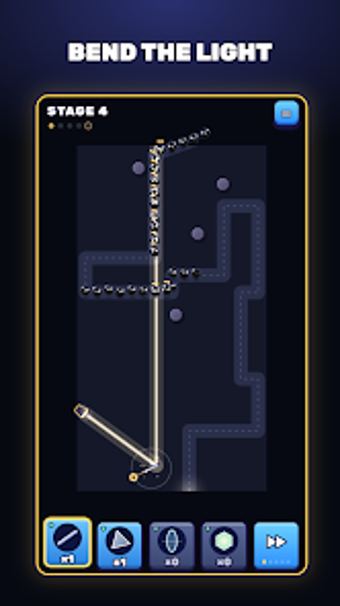
Players bend, split, and focus spotlights by dragging and rotating mirrors, prisms, and lenses across a tactical map to protect a gate. Light Bend Master, from KAYAC Inc., blends physics-based puzzles with deck-building and roguelike choices: pick one of three power-up cards each wave, unlock 12 optical parts, and use environmental tiles like Fire and Ice. It's aimed at mobile strategy players who enjoy short, tactical sessions with layered decision making.
What kind of game combines puzzles with tower defense strategy?
In this game you place optical parts to shape beams that damage shadow enemies; that loop forms the core gameplay. The genre blends strategy and puzzle elements by having players assemble an optical layout each stage, then react as waves advance. The card-based progression and unlockable parts turn single-stage solves into a growing toolbox across runs, reflecting a deck-building focus grafted onto level-based defense encounters.
Does it demand precise touch controls and spatial thinking?
In this game you manipulate parts with one-finger drag-and-rotate controls, placing mirrors and lenses with a single handle to angle beams. The control scheme targets mobile play by keeping input to one touch, while the optical mechanics require spatial planning: prisms split rays, lenses merge them, and parts like Fiber or Gravity alter beam behavior. Players who think in angles and beam paths gain an advantage.
What challenges and progression shape the difficulty curve?
In this game difficulty rises through stages that introduce new shadow formations and obstacles, and five enemy archetypes present tactical variety: Runners heal in dark, Brutes resist weak beams, and Shields block frontal light. After each wave players choose one of three upgrade cards, a roguelike pick system that changes future options. Environmental tiles such as Fire and Ice add status effects to beams and complicate setup choices.
How replayable is the optical deck-building loop?
In this game repeat play comes from unlocking 12 optical parts and mixing them into decks, so successive runs differ as new parts appear. The combination of card picks per wave and progressive stages encourages experimenting with setups and counters to the five shadow types. The mix of procedural upgrade choices and a fixed stage map creates varied tactical problems without relying on random map generation.
Clear recommendation for strategy-minded mobile players, with a hardware caveat
Light Bend Master is a tactical choice for players who enjoy physics-driven puzzles within short mobile sessions and deck-building decisions. Its optical mechanics reward spatial problem solving and experimentation. However, it requires a modern Android build for best performance, which may limit play on older devices. Fans of mobile strategy that value precise touch control should give it a try.